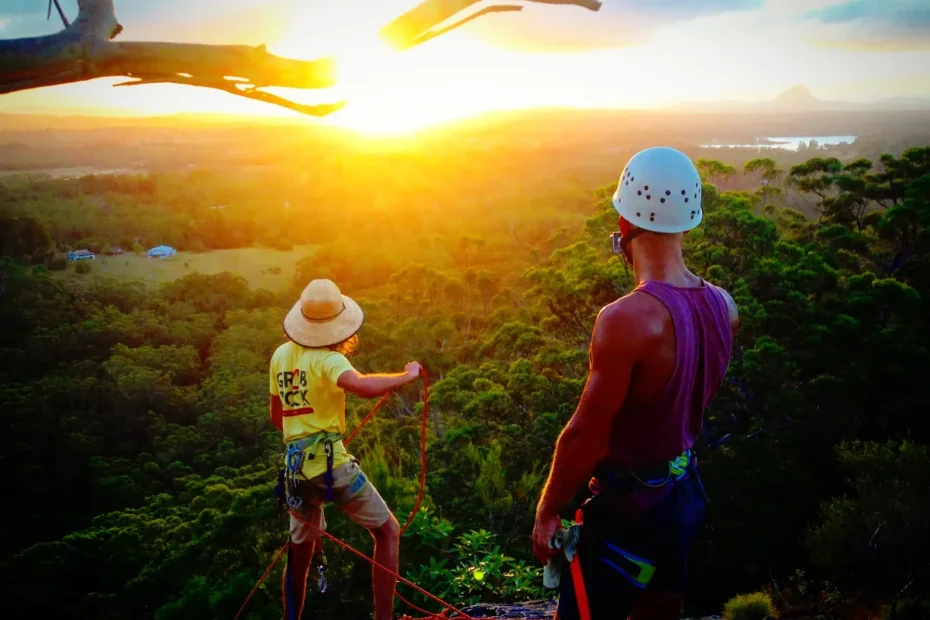
Australia is one of the best countries in the world for outdoor adventures. The scale of the landscape, the variety of terrain, and the sheer number of experiences available to visitors who are willing to get outside and move make it genuinely difficult to narrow down a list. There are surf breaks that have been drawing wave riders from around the world for decades. There are desert hiking routes where you can walk for days without seeing another person. There are gorges, reefs, mountain ranges, and coastal trails that rival anything available on the planet.
This guide covers seven outdoor adventures in Australia that are worth planning a trip around, chosen for the quality of the experience, the accessibility for international visitors, and the likelihood that you will still be talking about them years later. Each one is different in character, and together they give a picture of just how much this country offers to anyone who comes here looking for something more than a beach and a city skyline.
1. Hike the Overland Track in Tasmania
The Overland Track is Australia’s most famous multi-day bushwalk, and it deserves that reputation. The route runs 65 kilometres through the Cradle Mountain-Lake St Clair National Park in Tasmania’s central highlands, passing through alpine moorlands, ancient rainforest, and past some of the most dramatic mountain scenery in the country.
The standard walk takes between six and eight days and is done from north to south, starting at Cradle Mountain and finishing at Queenstown or Lake St Clair depending on your transport arrangements. The track is well marked and the huts along the route provide basic shelter, which means you do not need to carry a tent if you time your sections to reach each hut before nightfall.
The best time to walk the Overland Track is from November through April, which is the Tasmanian summer and the period when the alpine section between Cradle Mountain and Pelion Plains is reliably passable. In winter the track becomes significantly more challenging and requires experience with snow travel and navigation.
Bookings are required during the peak season from October through May, and a track fee applies. The Parks Tasmania website handles all bookings and the process is straightforward. Numbers are limited each day to protect the environment, so plan at least three to four months ahead if you want a specific start date during the summer window.
The Overland Track is not technically difficult, but it is long and the weather in the Tasmanian highlands changes without much warning. Waterproof gear, solid footwear, and a fitness level that can handle consecutive days of walking with a loaded pack are genuine requirements, not suggestions.
2. Surf at Bells Beach, Victoria
Bells Beach sits on the Surf Coast of Victoria, about 100 kilometres southwest of Melbourne, and is one of the most iconic surf breaks in the world. The Rip Curl Pro, the world’s longest-running professional surfing contest, has been held here since 1962, and the wave that breaks over the reef at Bells has shaped the culture of Australian surfing in a way that no other break quite matches.
For international visitors who surf, Bells needs no introduction. For those who are learning or curious about the experience of being in the water at a world-class location, it is worth noting that the break itself is not suitable for beginners. The reef is shallow, the waves are powerful, and the conditions change quickly. There are better beaches nearby, including Jan Juc and Thirteenth Beach, for visitors who want surf lessons or gentler conditions.
The headland above Bells Beach is accessible by a short walking track from the car park, and the view down onto the break from the clifftop is worth the visit even if you are not getting in the water. Watching experienced surfers work through a solid swell from above gives you a perspective on the wave that is impossible to appreciate from the shore.
3. Walk the Rim of the Blue Mountains, New South Wales
The Blue Mountains sit about 90 minutes west of Sydney and are one of the most accessible wilderness areas in Australia for international tourists staying on the east coast. The mountain range is part of the Great Dividing Range and the national park covers over a million hectares of sandstone escarpments, eucalyptus forest, and deep canyon country.
The classic walk for visitors is the Three Sisters circuit from Echo Point in Katoomba, which takes in the famous rock formation and descends into the Jamison Valley below. The full loop, which includes the Giant Stairway down into the valley and the Federal Pass trail back to the base of the Scenic Railway, takes around three to four hours at a comfortable pace and involves a significant descent and return climb.
For visitors who want more distance and less company, the track from Katoomba to Scenic World through the valley floor is excellent, and the Grand Canyon Track near Blackheath gives access to a slot canyon environment that surprises most people who have not seen it before. The canyon section involves some scrambling over rocks and walking through a narrow gorge with water running through it, and it is one of the better half-day walks in New South Wales.
4. Snorkel Ningaloo Reef, Western Australia
Ningaloo Reef sits off the remote northwest coast of Western Australia, near the small town of Exmouth, and it is one of the few places in the world where a fringing coral reef runs almost directly alongside the shore. Unlike the Great Barrier Reef, which requires a boat trip to reach, Ningaloo can be accessed by walking into the ocean from the beach.
The reef stretches for about 260 kilometres and supports an extraordinary range of marine life. Whale sharks, the largest fish in the ocean, aggregate at Ningaloo between March and July to feed on coral spawn, and swimming with them is one of the most sought-after wildlife experiences in Australia. The tours that operate from Exmouth during this period are licensed and well run, and the encounter itself, swimming alongside an animal that can reach twelve metres in length, is something that visitors consistently describe as unlike anything else they have done.
Outside of whale shark season, Ningaloo offers manta ray encounters, turtle nesting season between November and February, humpback whale watching from July through October, and reef snorkelling of a quality that rivals anywhere in the world. The remoteness of the location, which is a seven-hour drive from Perth or a short flight to Learmonth Airport, keeps the crowds manageable and gives the entire area a character that more accessible reef destinations have lost.
5. Camp in Karijini National Park, Western Australia
Karijini is the second-largest national park in Western Australia and contains some of the most dramatic gorge landscapes on the planet. The park sits in the Pilbara region of the northwest, about 1,400 kilometres north of Perth, and the ancient geology of the area has produced a series of narrow, deep gorges carved through iron-rich rock that has been dated to over 2.5 billion years old.
The experience of descending into a Karijini gorge is genuinely unlike anything else in Australia. The walls close in around you as you drop below the surface, the temperature falls, the sound of running water fills the air, and the light changes from the harsh white of the Pilbara sun to something cool and diffused. At the bottom of gorges like Hancock and Weano, there are plunge pools fed by waterfalls where swimming is possible in conditions that feel almost impossible given the desert landscape above.
The park has two campgrounds and a small eco-retreat. The best time to visit is between April and September, when daytime temperatures sit between 20 and 30 degrees. In summer the gorges become dangerously hot and flash flooding is a genuine risk after rain. Check conditions with the park rangers before entering any gorge, and never enter a gorge if there is any sign of rain upstream.
6. Climb or Walk Around Uluru, Northern Territory
Uluru is the most recognisable natural landmark in Australia and one of the most sacred sites in the world. The sandstone monolith rises 348 metres above the flat red desert of the Northern Territory and has a base circumference of just under ten kilometres. It is larger than it looks in photographs, and standing at its base in the early morning light, when the colour shifts through shades of orange, red, and purple as the sun rises, is an experience that stays with visitors long after they leave.
The climb to the summit of Uluru was permanently closed in October 2019, in accordance with the wishes of the Anangu people, the Traditional Owners of the land, who had requested the closure for decades. Walking around the base, a ten-kilometre circuit that takes approximately three and a half hours, is the way most visitors now experience Uluru, and it is the better experience. The detail visible at ground level, the rock art, the water-worn formations, and the plants that grow in the shelter of the rock face, is not visible from above.
The surrounding area of Kata Tjuta, a group of 36 domed rock formations about 50 kilometres west of Uluru, is equally worth visiting. The Valley of the Winds walk through Kata Tjuta takes around three hours and passes through the gaps between the domes in a way that gives the formations a scale and presence that the more famous Uluru lookout circuits do not.
7. Sea Kayak in the Whitsundays, Queensland
The Whitsunday Islands are most commonly experienced from the deck of a sailing charter, which is a genuinely excellent way to see them. Sea kayaking through the same islands gives you something different: a water-level perspective, access to beaches and coves that larger vessels cannot reach, and a physical experience of the environment that sitting on a boat cannot replicate.
Several operators based in Airlie Beach offer guided sea kayaking trips ranging from half-day paddles to multi-day camping expeditions through the island group. The multi-day trips, which involve camping on uninhabited islands and paddling between them over three to five days, are among the more memorable outdoor experiences available to visitors anywhere in Australia.
The conditions in the Whitsundays are well suited to kayaking for most of the year. The passage waters between the islands are protected from the open ocean swell, and the trade winds that run through the region from the southeast between April and October provide pleasant paddling conditions. The same stinger precautions that apply to swimming in the area apply to kayaking, and reputable operators provide stinger suits during the relevant months.
Planning Your Outdoor Adventures in Australia
Australia rewards visitors who plan ahead. The best experiences, whether that is a spot on the Overland Track, a whale shark tour at Ningaloo, or a sailing kayak expedition in the Whitsundays, book out well in advance during peak season. The distances involved in getting between these locations are also worth factoring into your itinerary from the beginning. Karijini and Ningaloo, for example, are both in Western Australia but are still over 400 kilometres apart. The Red Centre is a separate trip from the east coast. Tasmania requires a flight or a ferry from Melbourne.
The best approach for international visitors is to pick two or three of these experiences and build an itinerary around them properly, rather than trying to fit all seven into a single trip. Australia is large enough that doing it justice requires either multiple visits or a very deliberate plan. Either way, the outdoor experiences available here are exceptional, and they are one of the strongest reasons to come.