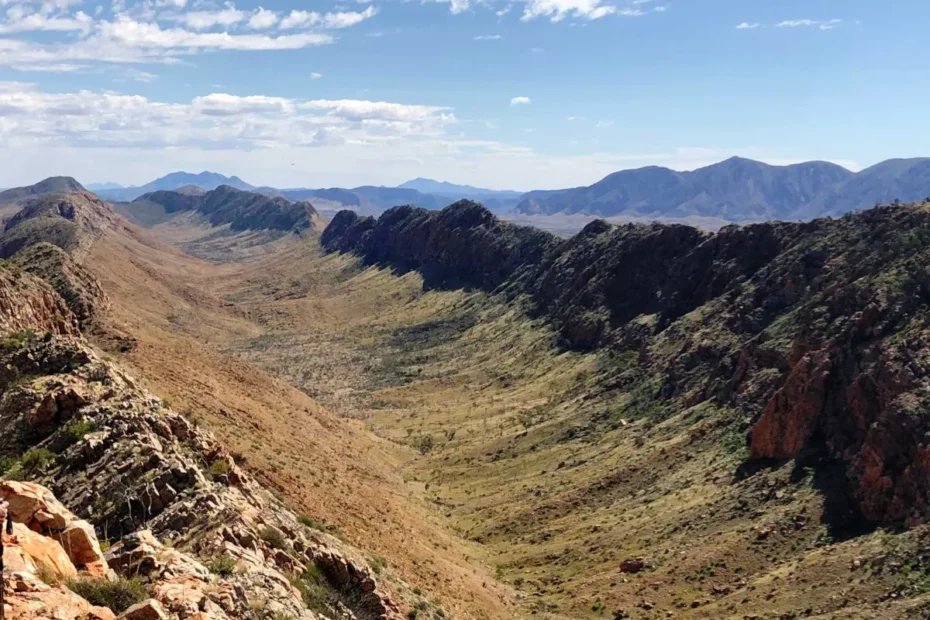
When people imagine a desert, they picture a featureless, dead expanse of shifting sand dunes where nothing changes and nothing survives. But the red heart of Australia defies every single global stereotype. The West MacDonnell Ranges, stretching west from Alice Springs in the Northern Territory, are a spectacular, buckled labyrinth of ancient quartz, fiery red sandstone chasms, and hidden, permanent waterholes that have sheltered life for millions of years. This is the ancestral home of the Arrernte people, a landscape shaped by deep spiritual histories and brutal tectonic shifts. Running along the very crest of this ancient mountain chain is a 223-kilometer track that ranks among the top extended wilderness walks on Earth. For true wilderness lovers, hiking the Larapinta Trail is the definitive outback expedition—a raw test of self-sufficiency, endurance, and desert navigation.
The trail is divided into 12 distinct sections, starting at the historic Alice Springs Telegraph Station and culminating on the dramatic, high-altitude summit of Mount Sonder. It is a journey of extreme contrasts. In a single day, you will transition from scrambling across exposed, wind-swept ridges under a blazing sun to wading through freezing, subterranean waterholes hidden inside narrow rock gorges where the sun never shines. The terrain is notoriously brutal on gear and bodies; the jagged, spinifex-covered rocks will shred lightweight trail-running shoes within days, and the extreme thermal swings demand flawless camp preparation.
This comprehensive, unedited guide strips away the romanticized tourism brochures to provide an honest look at trail logistics, water strategies, food drops, and safety protocols to ensure your desert expedition is a success.
Local Insight: The Sonic Reality of the Desert
First-time outback hikers always comment on the overwhelming silence of the desert at night, but the daytime reality is incredibly loud. The rustle of dry spinifex grass, the screech of flocking budgerigars swirling over waterholes, and the deep, booming echo of the wind slamming into canyon walls create an unforgettable natural soundtrack. When hiking the Larapinta Trail, leave your headphones packed away. The desert speaks continuously if you are willing to listen.
Technical Overview and Seasonal Windows
The Larapinta Trail is an extended, remote alpine-arid walk. It is entirely unsealed, aggressively rocky, and features significant vertical climbs.
- Total Distance: 223 Kilometers (Point-to-Point)
- The Optimal Window (May to August): This is the only safe window to attempt the full end-to-end trek. Arid winter days offer reliable blue skies and comfortable walking temperatures between 18°C and 26°C.
- The Danger Zone (October to March): Summer temperatures in the West MacDonnell Ranges routinely breach 42°C to 45°C in the shade. The rocks act as a natural oven, radiating intense heat. Advanced rescue operations are nearly impossible during these months, and water infrastructure can dry up. Do not attempt end-to-end treks in summer.
The Three Crucial Pillars of Larapinta Logistics
Unlike coastal tracks where help is often just a few kilometers away, the Larapinta Trail requires absolute precision across three core logistical frameworks before your boots even touch the red dirt.
1. The Water Management Protocol
There are zero natural, reliable flowing rivers along the trail. The Northern Territory Parks and Wildlife Service maintains heavy-duty, grey plastic water tanks at all official trailhead campsites.
- The Rule: These tanks are filled by 4WD rangers, but they are subject to high consumption. Never count on them for recreational use like washing clothes or bathing.
- Treatment: While the tank water is generally clean, it is untreated rainwater. You must use a high-quality filter or chemical purification tablets to prevent waterborne illness in remote areas.
- Capacity: You must be physically capable of carrying 5 to 7 liters of water on extended ridge sections where there is zero shade or replenishment for up to 30 kilometers.
2. The Strategic Food Drop System
Carrying 20 days of food weights is physically impractical over the steep, rocky ridges of the MacDonnell Ranges. Independent hikers utilize a system of heavy-duty lockable storage supply bins placed at strategic road-accessible intervals along the route.
- Key Drop Locations: Alice Springs Telegraph Station (Start), Standley Chasm (Section 3/4), Ellery Creek Big Hole (Section 6/7), and Ormiston Gorge (Section 9/10).
- How it Works: You can pay a local Alice Springs transfer company to securely deliver your pre-packed plastic tubs to these locked trail storerooms, or rent a 4WD and drive out to place them yourself before starting the hike.
3. Directional Strategy: East-to-West vs. West-to-East
While you can technically walk in either direction, walking from East to West (Alice Springs to Mount Sonder) is the superior choice for two clear reasons:
- The Weight Burden: Your pack is heaviest at the start of the trip when your legs are fresh. As you consume food and build fitness, your pack naturally lightens before you hit the most demanding vertical ascents in the western half.
- The Grand Finale: Ending your 223-kilometer journey by climbing Mount Sonder at sunrise provides an unforgettable emotional and visual climax to the expedition.
Section-by-Section Structural Reference Guide
To help you visualize the shifting terrain, distances, and challenges across the full length of the trail, we have compiled our field-tested data into a scannable structural reference table:
| Trail Section & Route | Total Distance | Physical Difficulty | Key Terrain Features | Reliable Water Tank? |
| Sec 1: Telegraph Station to Simpsons Gap | 23.8 km | Moderate | Open valleys, rocky creeks, ghost gums. | Yes (Simpsons Gap) |
| Sec 2: Simpsons Gap to Jay Creek | 24.5 km | Hard | Exposed ridge walking, sharp rocky descents. | Yes (Jay Creek) |
| Sec 3: Jay Creek to Standley Chasm | 13.6 km | Very Hard | High quartzite scrambles, boulder hopping. | Yes (Standley Chasm) |
| Sec 4: Standley Chasm to Birthday Waterhole | 17.7 km | Extreme | Brinkley Bluff summit, vertical scree slopes. | Yes (Birthday Waterhole) |
| Sec 5: Birthday Waterhole to Hugh Gorge | 16.0 km | Extreme | Linear Pass, deep narrow gorge navigation. | Yes (Hugh Gorge Junction) |
| Sec 6: Hugh Gorge to Ellery Creek Big Hole | 31.2 km | Extreme | Massive distance, exposed hot limestone plains. | Yes (Ellery Creek) |
| Sec 7: Ellery Creek to Serpentine Gorge | 13.8 km | Moderate | Red dirt tracks, spinifex flats, gorge views. | Yes (Serpentine Gorge) |
| Sec 8: Serpentine Gorge to Serpentine Chalet | 13.4 km | Hard | Counts Point lookout, high razorback ridges. | Yes (Serpentine Chalet) |
| Sec 9: Serpentine Chalet to Ormiston Gorge | 28.6 km | Very Hard | Mt Giles views, long sandy riverbeds. | Yes (Ormiston Gorge) |
| Sec 10: Ormiston Gorge to Finke River | 9.1 km | Easy | Rolling hills, soft sandy creek walks. | Yes (Finke River) |
| Sec 11: Finke River to Redbank Gorge | 26.0 km | Hard | High spinifex plains, base of Mt Sonder. | Yes (Redbank Gorge) |
| Sec 12: Redbank Gorge to Mt Sonder Summit | 15.8 km | Hard | Continuous vertical alpine-arid climb. | No (Carry full supply from Redbank) |
Outback Survival: Thermal Swings and Wildlife Realities
- The Extreme Temperature Drop: People assume deserts are always hot. However, due to the complete lack of cloud cover and cloud structures, the Red Center experiences massive radiation heat loss at night. During June and July, overnight temperatures routinely drop to -2°C to -5°C. Water bottles left outside tents will freeze solid. Packing high-quality thermal base layers, a down jacket, and a sleeping bag rated down to at least -7°C is a non-negotiable survival requirement.
- The Spinifex Hazard: Spinifex (Triodia) is the dominant grass species along the ridges. The tips of the leaves are needle-sharp and coated in a mild resin that causes punctured skin to inflates and itch for days. Do not hike the Larapinta Trail in standard gym shorts. Wear durable, long canvas trekking pants or heavy-duty canvas gaiters to protect your lower legs from the continuous scratching.
Wilderness Safety Warning: The Remote Hypothermia Threat
While heatstroke is the primary summer hazard, hypothermia is a serious risk during winter gorge walks. Gorges like Hugh Gorge and Stubbs Chasm feature deep, permanent waterholes walled in by 100-meter vertical cliffs. The water temperature is ice-cold year-round. If you are forced to swim or wade through these dark pools with a heavy pack on your back, your core body temperature will plummet instantly. Always pack your sleeping bag and clothing inside heavy-duty waterproof dry sacks within your backpack so you can change into dry gear the moment you exit a cold swim.
Cultural Protocols and Leave No Trace Mandates
The West MacDonnell Ranges are deeply sacred to the Arrernte people, who have managed this land for over 50,000 years. Compliance with these structural rules is expected of every nomad:
- Sacred Site Photography Bans: Certain geological formations along the trail (such as specific sections of Standley Chasm and Simpsons Gap) are designated sacred sites under Northern Territory law. These areas feature explicit signs requesting that you put your cameras away. Respect these boundaries completely; these are living cultural spaces, not mere tourist attractions.
- The Total Fire Ban: The collection of firewood is strictly prohibited across the entire length of the trail network. Open campfires are completely illegal. The dry desert vegetation is highly flammable, and a single stray spark can trigger a catastrophic bushfire that can trap hikers across remote ridges. Using a lightweight gas or liquid fuel canister stove is mandatory.
- The Cathole Protocol: At major trailhead campsites, composting toilets are provided. However, when walking the long ridge segments between camps, you must bury all human waste. Dig a hole at least 20 centimeters deep into the hard soil, and ensure it is located at least 100 meters away from all dry creek beds and trails. All toilet paper and feminine hygiene products must be packed out inside sealed, opaque plastic zip bags.
Final Thoughts: The Reward of the Trail
When you stand on the windswept summit of Mount Sonder at 06:00 AM, watching the first rays of the outback sun turn the entire MacDonnell Range system into a glowing ocean of deep orange and violet, the physical pain of the journey disappears.
Hiking the Larapinta Trail is an authentic journey through deep time. It strips away the superficial noise of modern life and replaces it with a profound connection to a wild, ancient landscape. You will leave the trail with a deep respect for desert ecology, an ironclad confidence in your own physical capabilities, and a true understanding of Australia’s red heart.