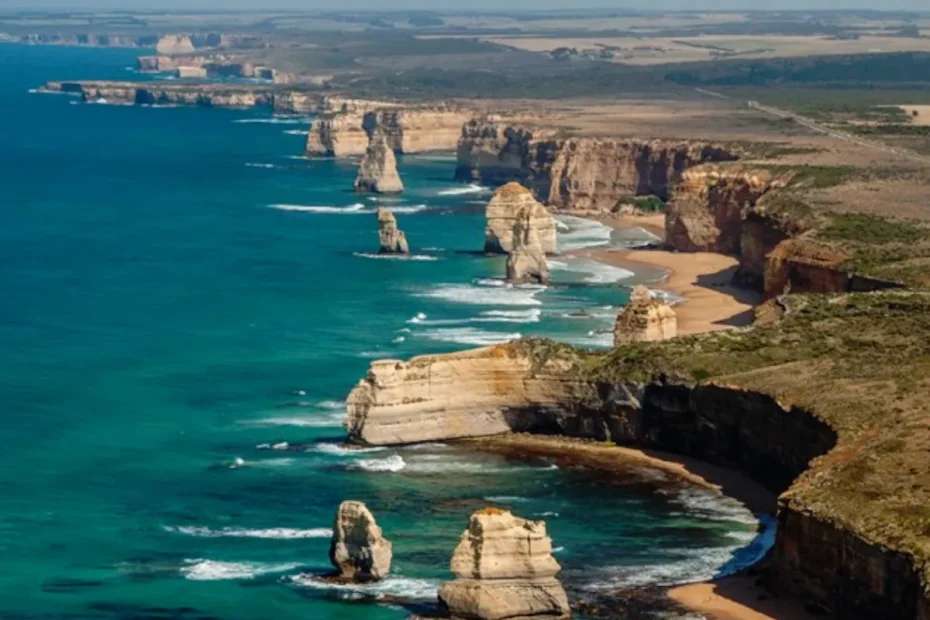
The Great Ocean Road is arguably Australia’s most famous stretch of tarmac. Stretching 243 kilometers along the rugged southeastern coast of Victoria, it was built by returned soldiers between 1919 and 1932 and stands today as the world’s largest war memorial. But here is the brutal truth: if you try to drive it in a single day, you are making a massive mistake.
Every morning, hundreds of massive tourist buses depart Melbourne at dawn. They race down the highway, stop for exactly twelve minutes at the Twelve Apostles for a frantic selfie session, and then speed back to the city in the dark. That is not an adventure; that is an endurance test. To actually experience the magic of this coastline—the ancient rainforests, the hidden koala colonies, the empty surf breaks, and the sheer limestone cliffs crumbling into the Southern Ocean—you need to slow down.
This comprehensive Great Ocean Road itinerary is designed for the independent traveler. Whether you are hiring a campervan, packing a tent into a rental car, or booking coastal cabins, this 5-day route strips away the rush. We bypass the crowded midday bottlenecks and focus on the raw, outdoor beauty that defines Victoria’s wild coast.
💡 Local Insight: The “Reverse Route” Strategy
Want to completely avoid the convoy of tour buses? Drive the route in reverse. Instead of starting in Torquay (the traditional start point), drive inland from Melbourne straight to Port Campbell on Day 1. Then, spend the next four days meandering back along the coast toward the city. You will hit the major viewing platforms, like the Twelve Apostles, in the morning light—hours before the crowds arrive from the east.
Day 1: Surf Culture and Coastal Forests
We begin the journey where the official road starts, just an hour and a half southwest of Melbourne. Today is about embracing the birthplace of Australian surfing and easing into the coastal rhythm.
- Morning: Torquay and Bells Beach (Activity Level: Easy to Moderate)Start your morning at Torquay, the undisputed surfing capital of Australia and the birthplace of brands like Rip Curl and Quiksilver. Grab a coffee at a local roaster and head straight to Bells Beach. Even if you don’t surf, walking the cliff-top trails here while watching the powerful Southern Ocean swells roll in is mesmerizing. If the tide is low, take the stairs down to the sand and explore the rock pools.
- Afternoon: Anglesea to Lorne (Activity Level: Easy)As you wind your way toward Lorne, the road hugs the cliff edges. Stop at the Anglesea Golf Club. It sounds unusual for an outdoor adventure guide, but the greens here are famous for hosting a massive population of Eastern Grey Kangaroos. By late afternoon, pull into Lorne. This vibrant town is the perfect place to grab fresh fish and chips and sit on the foreshore as the sun drops.
Day 2: Waterfalls and Wild Koalas
Today, the Great Ocean Road itinerary moves away from the beach and climbs into the dense, emerald-green canopy of the Great Otway National Park. This is where the landscape shifts dramatically from coastal scrub to ancient rainforest.
- Morning: Erskine Falls (Activity Level: Moderate – Lots of stairs)Just a short drive inland from Lorne is Erskine Falls. Plunging 30 meters into a lush fern gully, it is one of the most accessible and spectacular waterfalls in the region. Walk down the 230 steps to the base of the falls. The temperature drops significantly down here, surrounded by massive tree ferns that look like they belong in the Jurassic period.
- Afternoon: Kennett River Koala Walk (Activity Level: Easy)Continue driving west to the small hamlet of Kennett River. Turn onto Grey River Road. You don’t need a guided tour here; just look up. This dirt road is one of the best places in Australia to spot wild koalas sleeping in the eucalyptus trees. Please, keep your voices low and do not attempt to feed or touch the wildlife. Continue on to Apollo Bay for the night.
Day 3: The Deep Otways
Apollo Bay is the gateway to the deep Otways. Today requires a good pair of hiking boots and a rain jacket, as the weather in the rainforest can be highly unpredictable.
- Morning: Maits Rest Rainforest Walk (Activity Level: Easy)About 15 minutes west of Apollo Bay, you will find Maits Rest. This 800-meter circular boardwalk takes you right into the heart of the cool temperate rainforest. You will walk beneath towering Myrtle Beech trees, some of which are over 300 years old. It is incredibly quiet, damp, and deeply peaceful.
- Afternoon: Cape Otway Lightstation (Activity Level: Easy)Take the detour down to the Cape Otway Lightstation. Built in 1848, it is the oldest surviving lighthouse in mainland Australia. For thousands of 19th-century migrants who spent months at sea, this blinking light was their first sight of land. The cliffs here are battered by ferocious winds, offering a stark reminder of how treacherous this stretch of water—known as the Shipwreck Coast—truly is.
Day 4: The Shipwreck Coast & The Icons
This is the day you have been waiting for. The geology changes from forested hills to sheer, brutalist limestone cliffs. Because you stayed overnight nearby, you can beat the buses.
- Morning: The Twelve Apostles at Sunrise (Activity Level: Easy)Wake up in the dark and drive to the Twelve Apostles viewing platforms before the sun breaches the horizon. Watching the first light hit these massive limestone stacks, turning them from grey to blazing orange, is a spiritual experience. Without the crowds, the only sound is the roar of the Southern Ocean smashing against the base of the cliffs.
- Afternoon: Loch Ard Gorge and Gibson Steps (Activity Level: Moderate)Just a few minutes down the road is Loch Ard Gorge, named after a clipper ship that wrecked here in 1878. The gorge offers a protected beach surrounded by towering yellow cliffs. Afterward, head to the Gibson Steps. These steps were carved directly into the cliff face, allowing you to walk down to the beach and stand at the base of two massive offshore rock stacks. Standing on the sand, you realize just how massive these formations really are.
Day 5: Whales and the End of the Road
On your final day, the landscape flattens out as you approach the official end of the Great Ocean Road at Allansford, near the city of Warrnambool.
- Morning: Bay of Islands (Activity Level: Easy)Skip the crowded London Bridge lookout and keep driving west to the Bay of Islands Coastal Park. This area offers viewing platforms that rival the Twelve Apostles but see only a fraction of the foot traffic. The coastal heathland here is beautiful, particularly in spring when the native wildflowers are in bloom.
- Afternoon: Warrnambool & Logan’s Beach (Activity Level: Easy)Finish your Great Ocean Road itinerary in Warrnambool. If you are traveling between June and September, make a beeline for Logan’s Beach. This is a designated whale nursery where Southern Right Whales migrate from Antarctica to calve in the relatively warm, protected waters. Watching a mother and calf playing just a hundred meters offshore is the perfect way to conclude a wild coastal adventure.
Essential Packing & Planning Guide
| Item Category | What to Pack | Why You Need It |
| Clothing | Layers, waterproof windbreaker, sturdy hiking boots. | Victoria’s coastal weather is volatile. High winds and sudden rain are common, even in summer. |
| Connectivity | Downloaded offline maps (Google Maps/Maps.me). | Cellular reception completely drops out in the Otway National Park and along remote cliff sections. |
| Vehicle Prep | Full tank of fuel before Lorne. | Fuel stations are sparse past Apollo Bay, and prices surge heavily in remote townships. |
| Safety Gear | First aid kit, headlamp, reusable water bottles. | Crucial for sunrise/sunset hikes and remote beach access where facilities don’t exist. |
⚠️ Travel Warning: Driving Hazards
The Great Ocean Road is a single-lane highway in each direction with tight, blind corners. Do not pull over on the shoulder to take photos unless there is a designated scenic turnout. Furthermore, wildlife (kangaroos and wallabies) are highly active at dawn and dusk. Avoid driving at night to prevent dangerous collisions.
Frequently Asked Questions (FAQs)
1. Can I drive the Great Ocean Road in a 2WD rental car?
Yes, absolutely. The entire official route of the Great Ocean Road is fully sealed and well-maintained. You only need a 4WD if you plan on taking deep logging tracks into the Otways or exploring unsealed national park fire trails.
2. Where is the best place to camp along the route?
If you are in a campervan or tent, the blanket rule is that “freedom camping” (pulling over on the side of the road) is strictly illegal and heavily fined. However, there are incredible low-cost designated campsites like Blanket Bay in the Otways or the commercial holiday parks in Apollo Bay and Port Campbell which offer powered sites and hot showers.
3. Is it safe to swim at the beaches?
The Southern Ocean is notorious for powerful rips and strong undercurrents. Only swim at patrolled beaches (like Torquay, Lorne, or Apollo Bay) where lifeguards have placed red and yellow flags. Never swim at unpatrolled wilderness beaches along the Shipwreck Coast.
4. When is the best time of year to go?
The shoulder seasons (March to May, and September to November) offer the best balance. The weather is generally stable, the massive summer holiday crowds have dispersed, and accommodation prices are much more reasonable.