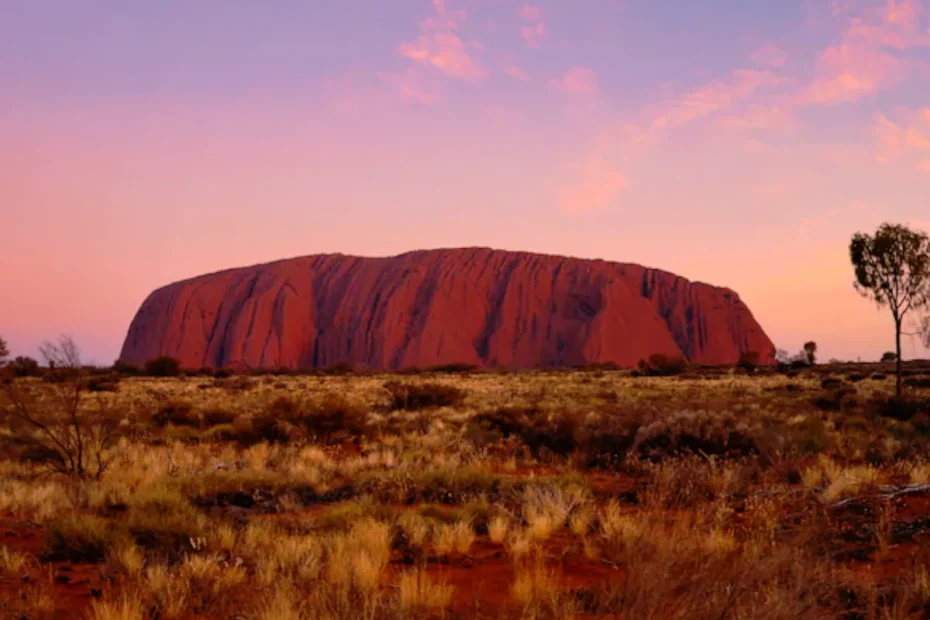
There is a moment, roughly an hour into the drive south from Alice Springs along the Stuart Highway, where the landscape transitions from typical dry Australian bush into something entirely mystical. The dirt transforms from a pale, dusty brown into a fiery, deep crimson. The horizon expands so violently that you feel incredibly small beneath a dome of indigo sky. This is the Gateway to the Red Centre—a vast, ancient desert ecosystem that represents the spiritual and geographic heart of Australia.
Many international tourists treat visiting Uluru and the Red Centre as a frantic, checkboxes-only weekend trip. They fly into the tiny Yulara airport, look at the big red rock, take a sunset photo with a glass of sparkling wine, and fly out. By doing so, they miss the true magic of the desert. The Red Centre is not a single landmark; it is a sprawling playground of deep sandstone canyons, ancient spiritual meeting grounds, and resilient desert wildlife that requires time, respect, and deliberate planning to appreciate.
Whether you are plotting a massive cross-country caravan expedition or renting a 4WD for a rugged outback loop, this comprehensive travel guide strips away the romanticized brochure fluff. We dive deep into the raw logistics, physical challenges, and cultural protocols required to experience Australia’s desert heart safely and authentically.
💡 Local Insight: The Mt. Conner Mirage
On the drive from Alice Springs to Uluru, almost every first-time traveler pulls over in a state of absolute excitement, pointing at a massive, flat-topped red monolith on the horizon and shouting, “Look, it’s Uluru!” It isn’t. You are looking at Mt. Conner, affectionately known by locals as “Fuluru” (Fake Uluru). Situated on a private cattle station, Mt. Conner is actually three times larger in area than Uluru and significantly older. Enjoy the view, but don’t blow your camera battery just yet.
Getting There: Fly vs. Drive Logistics
Navigating the logistics of the Red Centre is your first major hurdle. The distances in the Northern Territory are immense, and making the wrong transit choice can drain your budget before you even see a single gorge.
Option A: Flying Directly In
You can fly straight into Connellan Airport (AYQ) at Yulara, which sits just 10 minutes outside the Uluru-Kata Tjuta National Park resort hub.
- The Pros: Saves you a massive amount of transit time; ideal if you only have 3 to 4 days of total travel time.
- The Cons: Car rental rates at Yulara are among the most expensive in the Southern Hemisphere, and corporate fleets often cap your daily kilometers, hitting you with steep penalties if you drive out to Kings Canyon.
Option B: The Alice Springs Fly-and-Drive (Recommended)
Flying into Alice Springs (ASP), renting a rugged vehicle, and driving the 450-kilometer journey down to Uluru is the ultimate nomadic path.
- The Pros: Considerably cheaper flight options, highly competitive car and campervan hire rates, and unlimited kilometer structures are standard. Plus, you get to experience the raw vastness of the outback highway.
- The Cons: Requires an entire dedicated day of driving just to reach the park boundaries.
The Ultimate 4-Day Red Centre Itinerary
To truly capture the essence of the desert, you must look past the singular image of Uluru. This field-tested 4-day loop captures the geological trifecta of the desert: Uluru, Kata Tjuta, and Kings Canyon.
Day 1: Alice Springs to Yulara (The Desert Transit)
Depart Alice Springs early in the morning to beat the heavy road trains. Cruising down the single-lane Stuart Highway is a lesson in outback meditation. Stop at the Erldunda Roadhouse for a meat pie and fuel up your vehicle. Turn west onto the Lasseter Highway. By late afternoon, you will check into your accommodation at Yulara. Head directly to the public sunset viewing platforms inside the National Park to watch the rock change from ochre to glowing violet as the dusk settles.
Day 2: Uluru Sunrise, The Base Walk & Cultural Center
- Sunrise: Set your alarm for 5:00 AM. Heading to the Talinguru Nyakunytjaku lookout allows you to watch the sun rise over Uluru with the silhouette of Kata Tjuta resting in the far background.
- The Activity (The Base Walk): Skip the driving tour. Lace up your boots and undertake the full 10-kilometer Uluru Base Walk. Walking right up against the sheer, textured sandstone walls reveals hidden caves, ancient rock art sites, and waterholes that you completely miss from a car window.
- The Protocol: Respect all signs indicating sacred Anangu sites where photography is strictly forbidden. The rock is a living cultural landscape, not an amusement park.
Day 3: The Domed Giant of Kata Tjuta
Located 30 kilometers west of Uluru, Kata Tjuta (formerly known as The Olgas) comprises 36 massive conglomerate rock domes that are structurally taller than Uluru.
- The Hike: Tackle the 7.4-kilometer Valley of the Winds Walk. This trail winds through steep, narrow rocky chasms and offers jaw-dropping panoramic views of the desert floor. It is physically demanding, steep, and easily one of the most rewarding wilderness hikes in Australia.
Day 4: The Rim Walk at Watarrka (Kings Canyon)
Drive three hours north of Yulara to Watarrka National Park. Kings Canyon features 100-meter-tall sandstone walls dropping into a lush, subterranean forest pocket known as the Garden of Eden.
- The Hike: The 6-kilometer Kings Canyon Rim Walk begins with a brutal, nearly vertical climb known by locals as “Heartbreak Hill.” Once you conquer the initial ascent, you are treated to a spectacular, otherworldly landscape of weathered sandstone domes that resemble ancient lost cities.
Outback Survival: Financial Realities
Traveling through remote desert environments means factoring in heavy transport logistics costs. Below is a scannable structural breakdown of baseline travel budgets to help you plan your travel capital efficiently:
| Expense Category | Baseline Budget (AUD) | Critical Strategic Saving Tip |
| Fuel (Per Liter) | $2.40 – $2.95 | Prices spike heavily at remote roadhouses. Always fuel up fully in major hubs like Alice Springs or Yulara resort stations. |
| National Park Pass | $38.00 per adult | Valid for 3 consecutive days; purchase your digital pass online before arrival to skip terminal queues. |
| Basic Camp Site | $30 – $55 / night | Unpowered sites at Yulara or Kings Canyon resort require booking months in advance during peak season. |
| Outback Dining | $25 – $45 / meal | Grocery prices in remote outback supermarkets carry a heavy premium. Buy your dry rations and bulk water in Alice Springs. |
Field Notes: Respect, Flies, and Desert Safety
- The Sacred Climb Ban: For decades, tourists climbed the face of Uluru, causing severe environmental degradation and deeply disrespecting the traditional owners, the Anangu people. The climb was permanently closed in 2019. Embrace the rock from its base; the cultural energy is felt on the ground, not from the top.
- The Infamous Desert Fly: Between October and March, the outback bush fly population explodes. They do not bite, but they aggressively target your eyes, nose, and mouth for moisture. Do not let pride ruin your trip; buy a $5 mesh fly net to slip over your wide-brimmed hat at the first roadhouse you see.
- Thermal Management: The desert climate is brutal. In summer, temperatures routinely cross 40°C by 10:00 AM, at which point rangers will legally close advanced trails like the Valley of the Winds for safety. Hike early, carry a minimum of three liters of water per person, and consume electrolyte powders intentionally.
⚠️ Outback Driving Warning: Dawn, Dusk, and Debris
Rental car insurance policies in the Northern Territory explicitly void all coverage for single-vehicle accidents that occur on regional highways between sunset and sunrise. The reason? Massive feral camels, wild horses (brumbies), and giant red kangaroos swarm the asphalt as the temperature drops to lick moisture off the road. Hitting a 500-kilogram camel at 110 km/h is catastrophic. Park your vehicle before dusk.
Frequently Asked Questions (FAQs)
1. When is the absolute best window for visiting Uluru and the Red Centre?
The winter shoulder window from May to September is perfect. Daytime temperatures hover between a comfortable 20°C and 28°C, making long-distance trekking safe and highly enjoyable. However, desert winter nights drop below freezing, so packing heavy thermal layers is absolutely essential if you are camping.
2. Can I undertake this itinerary in a standard 2WD vehicle?
Yes. The entire highway loop connecting Alice Springs, Yulara, and Kings Canyon (The Red Centre Way via the asphalt route) is fully sealed and highly maintained. You only require a rugged 4WD high-clearance vehicle if you intend to take the unsealed tourist shortcut across the Mereenie Loop dirt track.
3. Is there internet connectivity in the deep desert?
Mobile phone reception is highly stable within the immediate resort hubs of Yulara and the town center of Alice Springs. However, the moment you drive 15 minutes outside these zones onto the open highways, signals completely drop out. Downloading offline digital navigation maps is a mandatory safety step.
4. Are there any free camping zones inside the National Parks?
Absolutely not. Freedom camping or pulling over on the side of the highway within the national park boundaries is strictly illegal and subject to heavy structural policing and fines. You must utilize designated campgrounds like the Yulara Tourist Park or the Kings Canyon Resort campground infrastructure.