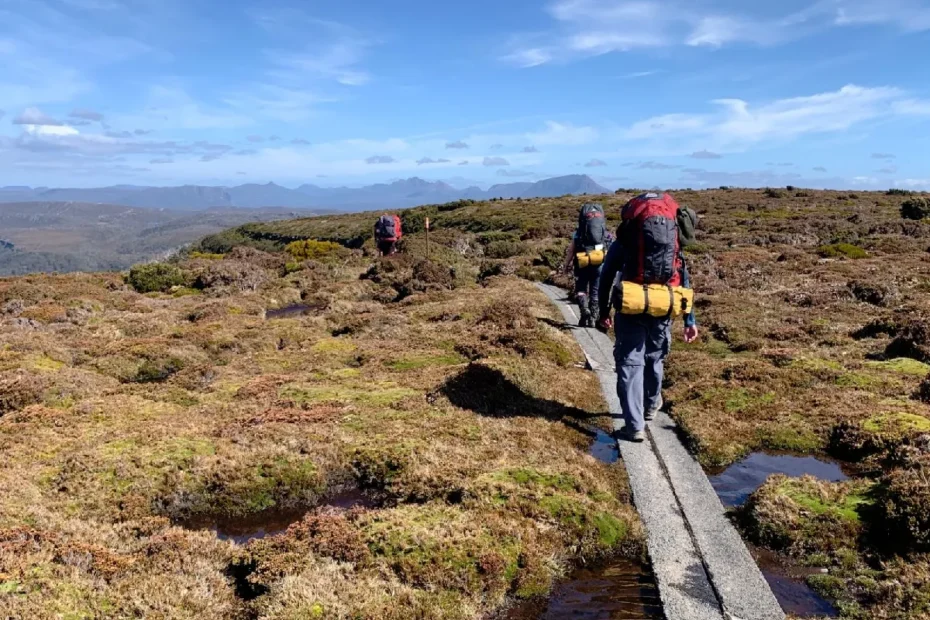
Mainland Australia is famous for its endless golden deserts, red dirt highways, and sun-bleached coastal fringes. But if you head south across the volatile waters of the Bass Strait, the continent fractures into a completely different world. Tasmania is a rugged, ancient island sculpted by ice, cloaked in cool temperate rainforests, and battered by the roaring forties winds. At the epicenter of this wild terrain lies a 65-kilometer journey that stands as a rite of passage for wilderness enthusiasts worldwide. Undertaking the physical challenge of hiking the Overland Track is not just an ordinary multi-day trek; it is a profound immersion into a prehistoric sub-alpine landscape that feels entirely removed from modern civilization.
Winding its way from the dramatic, glaciated silhouette of Cradle Mountain down to the deep, silent waters of Lake St Clair (Australia’s deepest natural lake), this legendary trail cuts directly through the heart of the UNESCO Tasmanian Wilderness World Heritage Area. The track demands respect. It exposes walkers to extreme logistical planning, challenging vertical ascents, and alpine ecosystems where snowstorms can materialize in the middle of mid-summer. Yet, for those willing to shoulder their own survival gear and push past their physical limits, it delivers an unparalleled outdoor reward.
This definitive, unedited guide strips away the romanticized tourist brochures. We dive directly into the cold realities of trail logistics, day-by-day terrain demands, mandatory safety protocols, and field-tested gear requirements to ensure your expedition into the Tasmanian wilderness is successful.
Local Insight: The “Deceptive July” Winter Fallacy
Many international trekkers look at Australia’s overall mild climate map and assume that hiking the Overland Track during the low winter season (June to August) is just a matter of wearing an extra fleece layer. This assumption is dangerous. Tasmania’s alpine plateau experiences true alpine winter conditions with heavy snow drifts, sheet ice across steep boardwalks, and whiteout blizzards that completely obscure trail markers. Unless you are fully certified in cold-weather mountaineering, alpine navigation, and carrying extreme winter sub-zero survival gear, stick strictly to the regulated walking season.
Trail Logistics: Permits, Booking Windows, and Directional Rules
Because of the high environmental vulnerability of the sub-alpine vegetation, the Tasmanian Parks and Wildlife Service restricts trail access through a strict, seasonal permit system. Navigating these parameters is your very first hurdle.
The Regulated Walking Season (October 1 to May 31)
During this peak window, you cannot simply show up and start walking. You must secure an official Overland Track Pass months in advance when the digital booking booking window opens.
- The Directional Rule: To minimize environmental erosion and prevent trail bottlenecks, all hikers must walk in a strict North-to-South direction (starting at Cradle Mountain and finishing at Lake St Clair).
- The Hut Protocol: The track features public, un-serviced wooden huts at the end of each official day. While these structures provide basic shelter and rainwater tanks, they operate on a first-come, first-served basis. Carrying a high-quality, 3-season dual-skin tent is a mandatory legal requirement, as huts can easily overflow during peak trekking weeks.
The Off-Season Window (June 1 to September 30)
During the freezing winter months, booking fees drop significantly, and hikers are permitted to walk in either direction. However, park rangers do not actively patrol the tracks, huts are freezing, and tracking systems are limited. This window is strictly reserved for elite, self-sufficient winter expedition specialists.
Day-by-Day Expedition Breakdown
A standard journey takes six days to complete. Below is a realistic, field-audited breakdown of the daily physical output, terrain milestones, and optional side-trips.
[Cradle Valley] ---> (Day 1) ---> [Waterfall Valley] ---> (Day 2) ---> [Windermere]
                                                                            |
                                                                          (Day 3)
                                                                            v
[Lake St Clair] <--- (Day 6) <--- [Windy Ridge] <--- (Day 5) <--- [Kia Ora] <--- (Day 4) <--- [Pelion Plains]
Day 1: Cradle Valley to Waterfall Valley
- Distance: 10.7 Kilometers | Average Time: 4 to 6 Hours
- Terrain Milestone: The brutal ascent past Marion’s Lookout.
- The Reality: This is arguably the most physically punishing day of the entire trek. You start with a heavy, fully loaded multi-day pack and immediately face a steep, exposed climb up toward the alpine plateau. In high winds, the chain-assisted scramble up to Marion’s Lookout requires absolute focus. Once on the plateau, you are treated to breathtaking, unobstructed views of Cradle Mountain before dropping down into the button-grass plains of Waterfall Valley.
Day 2: Waterfall Valley to Lake Windermere
- Distance: 7.8 Kilometers | Average Time: 2.5 to 3.5 Hours
- Terrain Milestone: The sweeping alpine moorlands.
- The Reality: A shorter, highly visual day that allows your muscles to recover from Day 1. The track utilizes extensive wooden boardwalks designed to protect the fragile, swampy alpine cushion plants. You will traverse wide-open, wind-swept plains before arriving at the spectacular, dark waters of Lake Windermere, surrounded by ancient pencil pines.
Day 3: Lake Windermere to Pelion Plains
- Distance: 16.8 Kilometers | Average Time: 5 to 7 Hours
- Terrain Milestone: Forth River Valley descent and the rainforest transition.
- The Reality: A long, endurance-testing day that takes you across vast alpine herbfields before plunging you into dense, emerald-green moss forests. The descent into the Forth River Gorge is steep and muddy, followed by a gradual climb out onto the historic Pelion Plains. The Pelion Hut is the largest on the track and sits beneath the towering dolerite pillars of Mt Pelion East.
Day 4: Pelion Plains to Kia Ora (The Summit Nexus)
- Distance: 8.6 Kilometers (Base track only) | Average Time: 3 to 4 Hours
- Terrain Milestone: Pelion Gap and the Mt Ossa Summit detour.
- The Reality: The trail climbs steadily up to Pelion Gap, the alpine saddle separating Mt Pelion East and Mt Ossa (Tasmania’s highest peak at 1,617 meters). If the weather is perfectly clear and blue, you can drop your heavy pack at the platform and undertake the challenging, multi-hour scramble to the summit of Mt Ossa. Do not attempt this side-trip if clouds are rolling in or if the rocks are wet and icy. Afterward, drop down into the deep, ancient valleys of Kia Ora.
Day 5: Kia Ora to Windy Ridge
- Distance: 9.6 Kilometers | Average Time: 3.5 to 4.5 Hours
- Terrain Milestone: The historic Du Cane waterfall triad.
- The Reality: This day is a spectacular journey through ancient, cathedral-like temperate leatherwood and myrtle forests. Take the short, mandatory detours to see D’Alton, Fergusson, and Hartnett Falls—three massive, thundering waterfalls cutting through deep volcanic chasms. Finish the day at the modern, solar-powered Windy Ridge hut.
Day 6: Windy Ridge to Lake St Clair
- Distance: 9.0 Kilometers (To Narcissus Hut) | Average Time: 3 Hours
- Terrain Milestone: The Narcissus suspension bridge and the lake crossing.
- The Reality: The final stretch of track is a gentle, mostly flat cruise through open eucalypt forests to Narcissus Hut, located at the northern tip of Lake St Clair. From here, you have two distinct choices: walk an extra 17.5 kilometers along the dense lakeside trail to the Cynthia Bay visitor center, or board the pre-booked wilderness ferry to cruise across the lake in style, signaling the end of an epic expedition.
Mandatory Gear & Wilderness Preparation Matrix
There are no trash bins, power outlets, or supply outposts on the track. What you pack on your back determines your safety and baseline comfort. Use this field guide to audit your packing architecture:
| Equipment Category | Mandatory Survival Items | Why It Is Non-Negotiable |
| Shelter & Sleep | 3-Season rated tent (dual-skin, high wind resistance), sleeping bag rated down to at least -5°C, insulated sleeping mat. | Sub-alpine temperatures routinely drop below freezing overnight, even during peak summer weeks. Hypothermia is a real threat. |
| Apparel Architecture | Three-layer system: Merino wool base layers, heavy fleece mid-layer, premium GORE-TEX outer shell jacket. No denim or cotton. | Cotton holds moisture, sweat, and rain, accelerating drops in core body temperature. Merino and synthetic fabrics dry rapidly. |
| Cooking & Energy | Liquid fuel or canister stove, waterproof matches, lightweight cooking pot, calorie-dense dehydrated meals (pack 1 extra day of emergency rations). | Open campfires are strictly prohibited across the entire national park. Fuel stoves are your only source of heat and hot water. |
| Navigation & Health | Hardcopy topographic map, magnetic compass, heavy-duty first aid kit (with snake bite bandages), water purification tablets. | Electronic GPS devices and phones can easily experience battery failure due to sub-zero alpine conditions. |
Leave No Trace & Wildlife Protocols
Tasmania’s wilderness remains pristine because of aggressive environmental management. Compliance with these structural protocols is expected of every nomad:
- The Fuel Stove Mandate: The entire Overland Track is designated a “Fuel Stove Only” zone. Collecting firewood, snapping dead branches, or lighting open fires is completely illegal.
- The Currawong Menace: Black Currawongs (large, highly intelligent crow-like birds native to Tasmania) have learned how to open equipment zippers, unclip backpack buckles, and puncture lightweight tent walls to steal food rations. Never leave your pack unattended at lookouts, and secure all food inside heavy-duty, hidden dry sacks.
- The Red-Bellied Black Snake: During hot summer stretches, native venomous snakes like the Tiger Snake and Copperhead bask directly on the wooden boardwalks. Never attempt to prod or step over a snake. Stop completely, maintain a safe three-meter distance, and wait for the reptile to move off into the button grass naturally.
Wilderness Safety Warning: The Threat of Hypothermia
The Western alpine plateau of Tasmania is completely exposed to sudden Southern Ocean weather systems. A blue-sky 22°C morning can decay into a 2°C sleet storm with gale-force winds in under forty minutes. If you notice signs of slurred speech, clumsy physical coordination, or uncontrollable shivering in yourself or a trekking partner, stop immediately. Do not attempt to push through to the next hut. Pitch your tent instantly to get out of the wind, strip away wet clothing, and get into a sub-zero rated sleeping bag.
Frequently Asked Questions (FAQs)
1. Is the water from the track tanks safe to drink without treatment?
The rainwater tanks located at the public park huts are fed directly by pure wilderness rainfall. Most local hikers drink it without filtering. However, to guarantee total safety against localized water-borne pathogens like Giardia, using a lightweight UV purifier or water purification tablets is highly recommended.
2. Can I complete the track without carrying a heavy multi-day backpack?
The only way to hike the track without a heavy survival pack is to book an incredibly expensive, highly exclusive guided commercial tour. These private operators maintain separate, hidden luxury eco-lodges along the trail, providing hot showers, gourmet meals, and beds, meaning you only carry a lightweight daypack. For independent hikers, self-sufficiency is mandatory.
3. What do I do with my human waste while trekking between huts?
All official overnight campsites and huts feature highly advanced, environmentally sealed composting drop toilets. If you need to go while walking between huts on the trail, you must walk at least 100 meters away from all water sources and tracks, dig a “cathole” at least 15 to 20 centimeters deep, and bury all waste completely. All wet wipes and feminine hygiene assets must be carried out in sealed plastic bags; do not drop them in the composting toilets.
4. How do I arrange transport connections back to my vehicle?
Because the track is a linear, point-to-point journey, organizing your entry and exit transport requires careful planning. Most independent trekkers utilize specialized wilderness shuttle bus companies that depart daily from Hobart or Launceston, dropping you off at the Cradle Mountain visitor center and picking you up six days later at the Cynthia Bay terminal at Lake St Clair. Ensure these connections are fully locked in before your trek start date.